




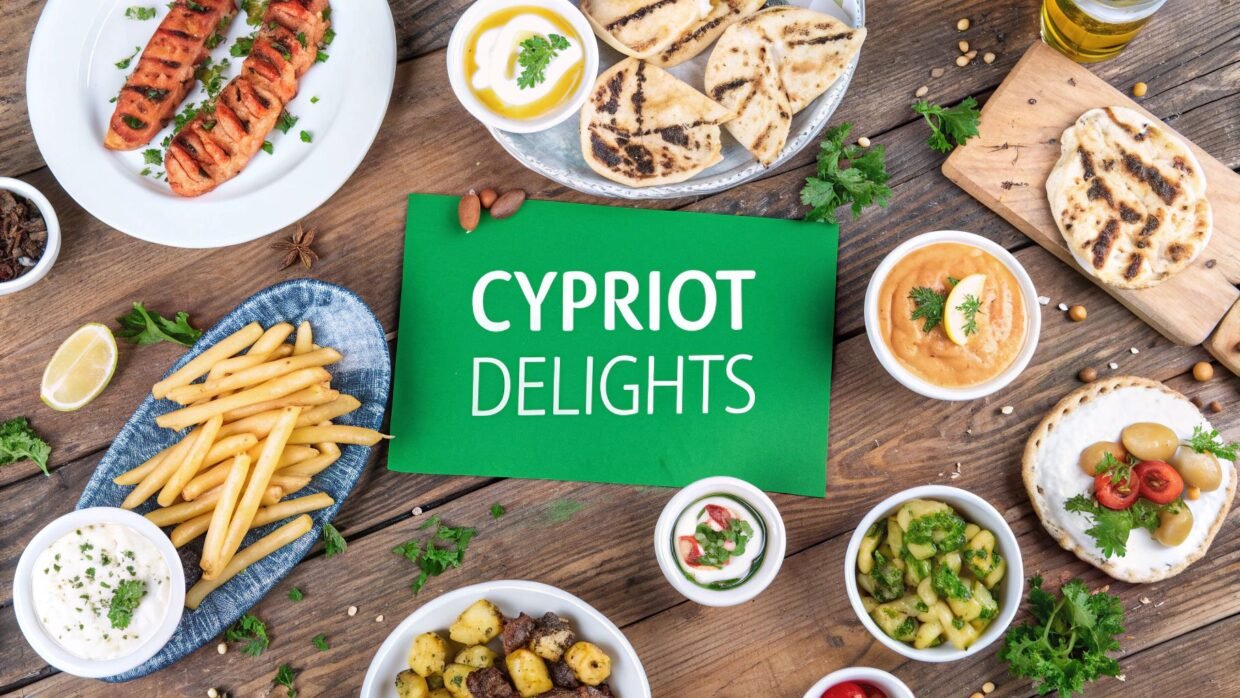
Welcome to Cyprus, an island where every meal tells a story steeped in history, flavour, and sunshine. More than just a beach destination, Cyprus offers a culinary tapestry woven from Greek, Turkish, and Middle Eastern influences, creating a unique gastronomic identity. For travellers seeking an authentic taste of the island, exploring its traditional dishes is non-negotiable. This isn't just about eating; it's about experiencing the heart of Cypriot culture, where hospitality is served on every plate.
This guide is your direct route to the most authentic culinary experiences. We will move beyond the generic tourist menus to explore the 8 most iconic dishes that define the island's palate. You will discover what makes each dish special, its cultural significance, and, most importantly, where to find the best examples.
From the smoky aroma of perfectly grilled souvlaki to the rich, slow-cooked tenderness of kleftiko, we are about to embark on a flavourful adventure. Whether you are a dedicated food enthusiast or simply want to enrich your travels, this list provides a curated look at the essential traditional food from Cyprus. Prepare to savour every bite of this Mediterranean jewel.
1. Souvlaki
Souvlaki is the undisputed king of Cypriot street food and a cornerstone of the island's culinary identity. This seemingly simple dish consists of small, succulent pieces of meat, typically pork or chicken, marinated and then threaded onto skewers. The skewers are grilled to perfection over hot charcoal, a cooking method known as foukou in Cyprus, which imparts a distinctive smoky flavour that is simply irresistible.
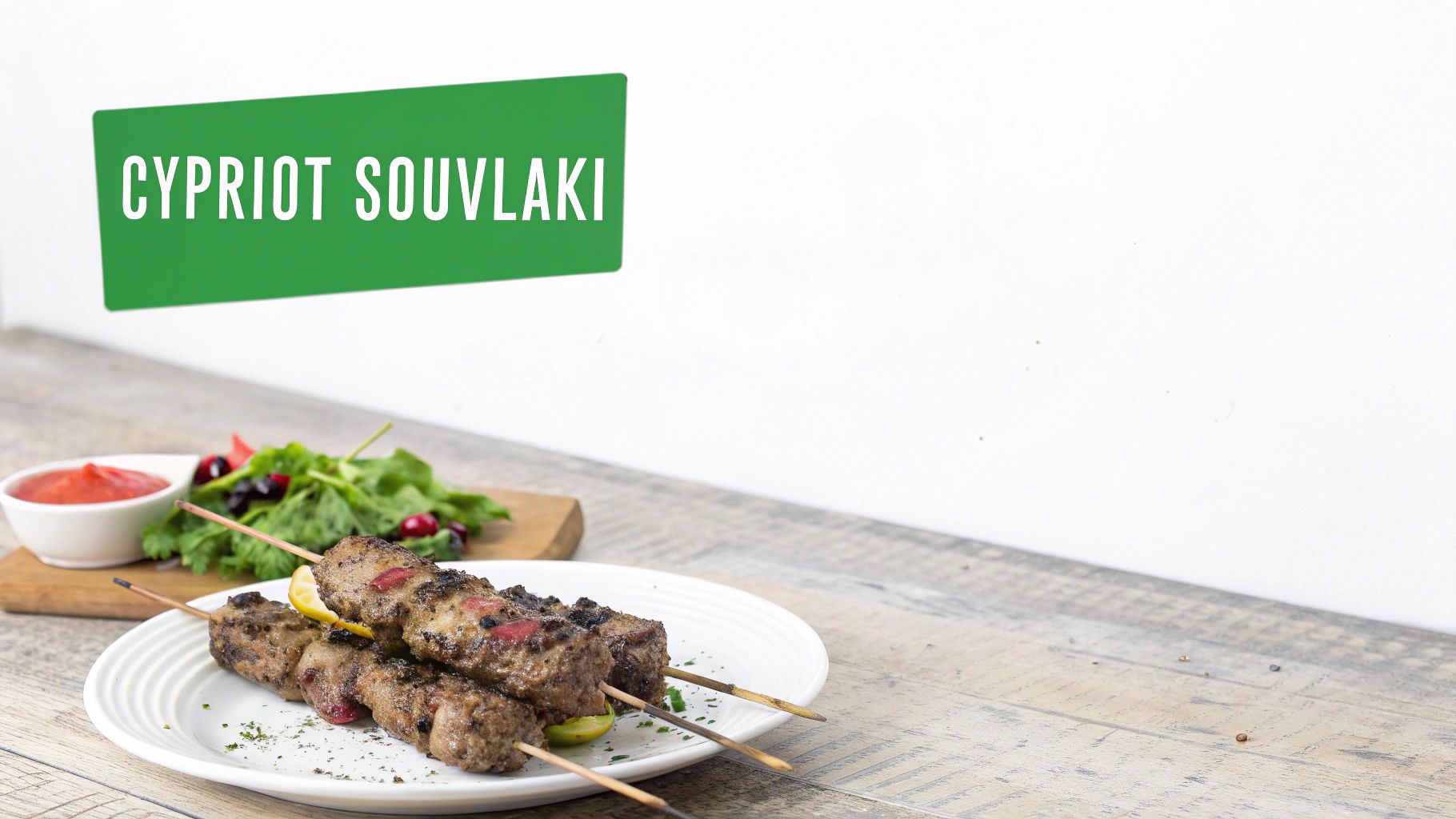
While many cultures have their own version of grilled meat on a stick, Cypriot souvlaki stands apart. The pieces of meat are generally larger and more robust than their Greek counterparts. Crucially, they are served in a large, fluffy Cypriot pita bread, which is notably thinner, flatter, and has a pocket, perfect for stuffing with a fresh salad of cucumber, tomato, onion, and parsley. It's a complete, satisfying meal that represents the heart of Cypriot social life, from bustling city tavernas to lively family barbecues.
Why It's a Must-Try
Souvlaki is more than just a meal; it's a cultural experience. It is often the centrepiece of social gatherings, from village festivals to Sunday family lunches where the foukou is fired up in the backyard. For anyone seeking an authentic taste of the island, sharing souvlaki offers a direct connection to local traditions. It’s a prime example of the fresh, flavourful, and communal nature of the best traditional food from Cyprus.
Pro Tips for the Perfect Souvlaki Experience
To enjoy souvlaki like a true local, keep these tips in mind:
- Choose the Right Meat: While pork is the most traditional choice, chicken is equally popular. For a richer flavour, ask for sheftalia (a herby, minced meat sausage) to be added to your pita alongside the souvlaki.
- Embrace the Sides: A proper Cypriot souvlaki serving is incomplete without accompaniments. Expect pickled vegetables, tahini sauce, and a squeeze of fresh lemon to elevate the flavours.
- Watch It Being Made: Find a local taverna or grill house where you can see the souvlaki being cooked over charcoal. This not only guarantees freshness but also adds to the authentic experience. For more information on this beloved dish, you can learn more about Souvlaki on saycyprus.com.
2. Halloumi
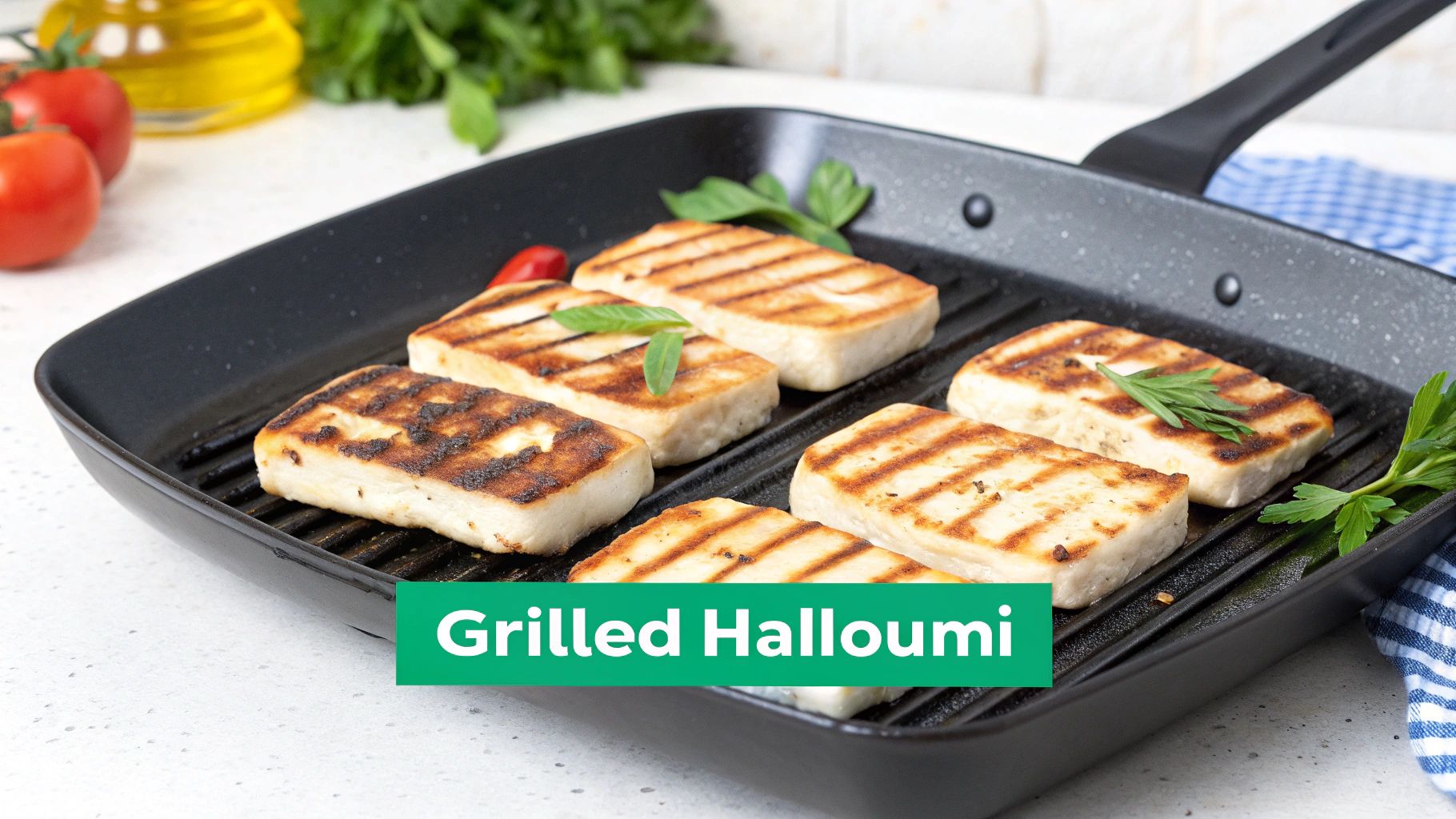
Halloumi is arguably Cyprus's most famous culinary export and a source of immense national pride. This unique, semi-hard, unripened cheese is traditionally made from a mixture of goat's and sheep's milk, giving it a distinctive layered texture. Its most celebrated characteristic is its high melting point, which allows it to be grilled or fried to a perfect golden-brown crispness without losing its shape, transforming its salty flavour and firm texture into something utterly delicious.
With a history stretching back over 500 years, halloumi is deeply woven into the fabric of Cypriot life. It holds Protected Designation of Origin (PDO) status, meaning authentic halloumi can only be produced in Cyprus according to strict traditional methods. It can be enjoyed fresh, where it has a characteristic 'squeak' when bitten, or cooked, where its savoury profile shines. It's a staple in a traditional Cypriot breakfast alongside fresh tomatoes and cucumber, and a star ingredient in modern Mediterranean dishes worldwide.
Why It's a Must-Try
Tasting halloumi in its homeland is an essential Cypriot experience. It offers a direct taste of the island's agricultural heritage, from the mountain villages where it was first produced to the modern kitchens that celebrate it. Its versatility is unmatched; it can be a simple snack, a key part of a meze platter, or the centrepiece of a gourmet meal. Trying it here connects you to a culinary tradition that has captivated food lovers globally, making it a cornerstone of traditional food from Cyprus.
Pro Tips for the Perfect Halloumi Experience
To enjoy this cheese like a local, consider these simple tips:
- Go for the Grill: For the best flavour, slice the halloumi to about 1cm thickness and grill or pan-fry it in a dry, non-stick pan. There’s no need to add oil, as the cheese will release its own fats.
- Serve It Warm: Halloumi is at its best when served immediately after cooking, while it’s still warm, soft, and slightly crispy on the outside.
- Try Authentic Pairings: The classic Cypriot way to enjoy halloumi in the summer is to pair slices of the fresh, uncooked cheese with sweet, juicy watermelon. When cooked, a drizzle of honey or a squeeze of lemon juice provides a perfect flavour contrast. To discover more about this iconic cheese, you can explore the taste of Cyprus on saycyprus.com.
3. Kleftiko
Kleftiko is a legendary Cypriot dish that embodies the art of slow cooking, resulting in lamb so tender it melts in your mouth. The dish consists of large, bone-in pieces of lamb, traditionally marinated in olive oil, lemon juice, garlic, and herbs like oregano and bay leaves. It is then wrapped tightly, often in parchment paper, and cooked for several hours in a sealed oven until the meat is succulent and falls effortlessly from the bone.
The name Kleftiko translates to "stolen meat," hinting at its rustic origins. Legend says that bandits, or Kleftes, would steal lambs and cook them in sealed pits dug into the earth. This method prevented smoke from escaping, which would have given away their position. Today, that same principle of trapping steam and flavour is replicated in clay ovens or modern kitchens to achieve an incredibly deep and aromatic flavour profile, often accompanied by potatoes that have absorbed all the delicious juices.
Why It's a Must-Try
Kleftiko offers a taste of Cypriot history and hospitality in every bite. It is a celebratory dish, frequently served at Easter, weddings, and large family gatherings, making it a true centrepiece of communal dining. For visitors, tasting Kleftiko is an opportunity to experience one of the most cherished and authentic examples of traditional food from Cyprus. It showcases the local preference for simple, high-quality ingredients cooked with patience and care.
Pro Tips for the Perfect Kleftiko Experience
To savour this dish at its best, whether at a taverna or a family feast, keep these points in mind:
- Patience is Key: The magic of Kleftiko is in its long, slow cooking time. True Kleftiko is cooked for at least four to five hours at a low temperature, ensuring the meat is exceptionally tender.
- Look for the Seal: Traditionally, the dish is cooked in a sealed container. In a restaurant, it might be served directly from its parchment paper parcel or a small clay pot, which you unwrap at the table for a burst of incredible aroma.
- The Best Accompaniment: Kleftiko is almost always served with fluffy potatoes that have been cooked alongside the meat. A simple village salad and a glass of local red wine are all you need to complete this perfect meal. You can discover more about this classic dish and its place in Cypriot culture.
4. Moussaka
Moussaka is a celebrated casserole that holds a special place in the heart of Cypriot home cooking, often considered the ultimate comfort food. This rich, baked dish is constructed in layers, featuring a hearty base of sliced potatoes, courgettes, and aubergines. These vegetables are layered with a flavourful minced meat sauce, traditionally made with lamb or beef, spiced with cinnamon and herbs. The entire creation is crowned with a thick, creamy béchamel sauce and baked until golden and bubbling.
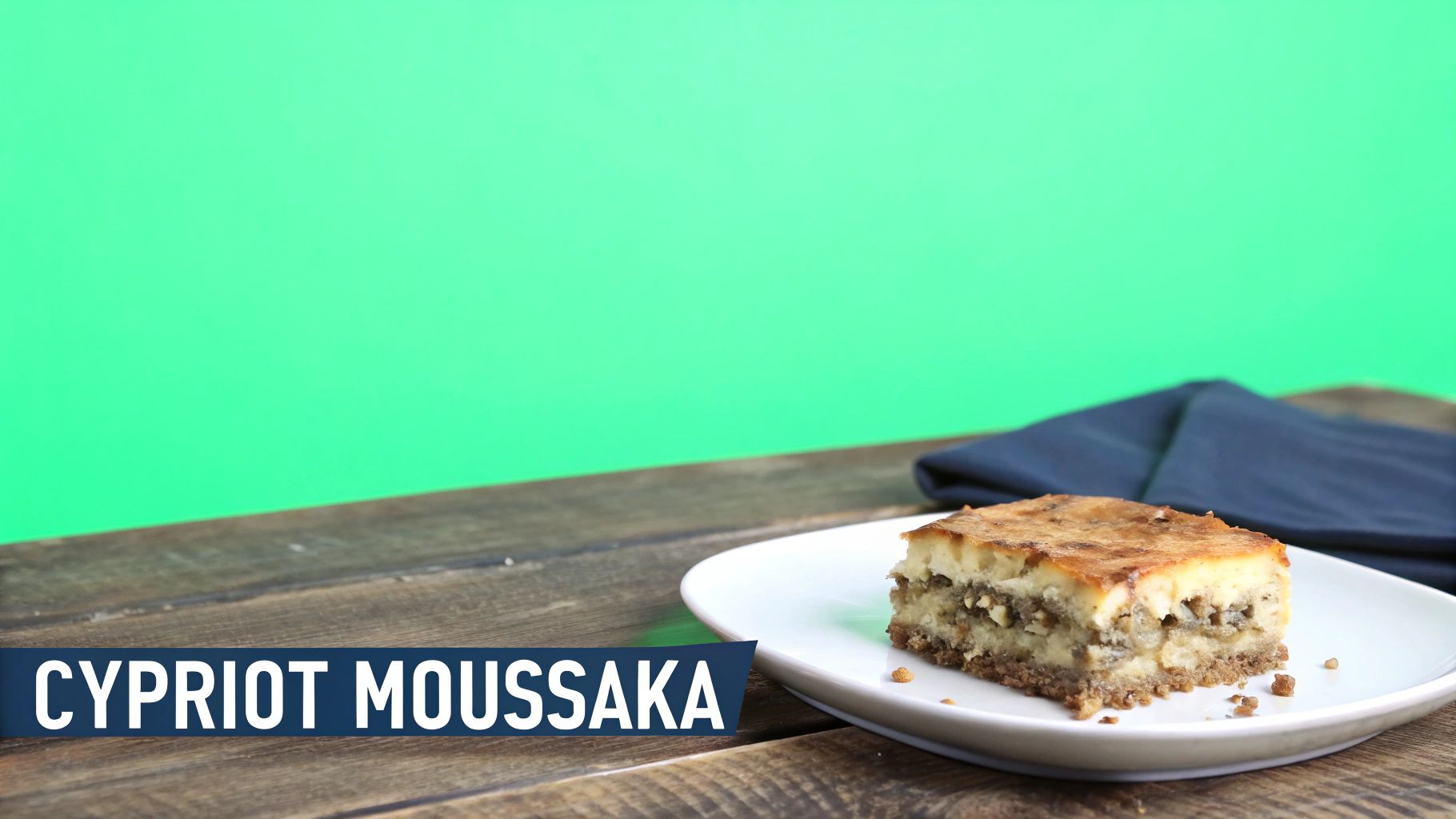
While many associate moussaka with Greece, the Cypriot version has its own distinct character. The inclusion of thinly sliced potatoes at the bottom is a hallmark of the island's recipe, adding a more substantial and earthy texture to the dish. This variation perfectly showcases the island's abundant summer vegetables and love for hearty, oven-baked meals. It’s a staple at Sunday family dinners and community celebrations, where a large tray is shared amongst loved ones.
Why It's a Must-Try
Moussaka offers a deep and satisfying taste of Cypriot culinary tradition. It beautifully combines the island's fresh produce with rich, slow-cooked flavours, representing the rustic and generous nature of local cuisine. Enjoying a slice of authentic, home-style moussaka provides a delicious insight into the family-centred food culture. It is a quintessential example of the wholesome and flavour-packed traditional food from Cyprus that warms both the stomach and the soul.
Pro Tips for the Perfect Moussaka Experience
To get the most out of this classic Cypriot dish, consider these local tips:
- Rest Before Serving: A key step for the perfect slice is patience. Allowing the moussaka to rest for at least 15-20 minutes after it comes out of the oven lets it set, making it much easier to cut into clean, layered portions.
- Seek Out Authentic Béchamel: The perfect béchamel topping is thick, creamy, and golden brown. A hint of grated nutmeg is the traditional secret ingredient that gives it a distinct, aromatic warmth.
- Pair It Simply: Moussaka is a rich and complete meal on its own. Locals typically serve it with a simple side salad of tomatoes, cucumber, and onions, dressed with olive oil and lemon juice to cut through the richness.
5. Afelia
Afelia is a quintessential Cypriot pork dish that masterfully combines two of the island's most cherished ingredients: locally produced red wine and aromatic coriander seeds. This slow-cooked stew consists of diced pork marinated and then braised in a rich, dry red wine, with whole or coarsely crushed coriander seeds providing a uniquely fragrant and citrusy warmth. The result is a deeply flavourful and tender dish that is both rustic and refined.
Unlike many Mediterranean stews that rely on a tomato base, Afelia's character comes entirely from the wine and spice marinade, setting it apart as a true Cypriot specialty. Traditionally served with pourgouri (bulgur wheat pilaf) or potatoes, its rich, aromatic sauce is perfect for soaking up with village bread. Afelia is a staple in family homes, especially during cooler months, and a highlight of any authentic meze spread in a traditional taverna.
Why It's a Must-Try
Afelia offers a unique taste profile that you won't find elsewhere in the region. It beautifully represents the island's long history of winemaking and its generous use of herbs and spices. Sampling this dish provides a delicious insight into the heart of Cypriot home cooking, showcasing how a few simple, high-quality ingredients can be transformed into a memorable meal. For food lovers, it's a perfect example of the distinctive and historic traditional food from Cyprus.
Pro Tips for the Perfect Afelia Experience
To appreciate Afelia at its best, consider these local tips:
- Look for Authenticity: Seek out family-run tavernas or restaurants in mountain villages, where recipes are often passed down through generations and prepared with exceptional care.
- Perfect Pairings: Afelia is traditionally served with pourgouri. This nutty, textured grain is the ideal companion to soak up the rich, wine-infused sauce.
- Fresh Coriander is Key: The best Afelia is made by crushing whole coriander seeds just before cooking, which releases their potent, fragrant oils. This small detail makes a significant difference to the overall flavour.
- Ask for the Wine: Inquire about the local red wine used in the cooking process. Many tavernas use wine from nearby vineyards, and ordering a glass of the same wine creates a perfect pairing for your meal.
6. Koupepia (Dolmades)
Koupepia, known elsewhere in the Mediterranean as dolmades, are tender grape vine leaves lovingly filled with a savoury mixture of minced meat (usually pork or beef), rice, fresh herbs, and finely chopped onions. These small, neat parcels are then arranged tightly in a pot and slowly simmered in a flavourful tomato and lemon broth until the rice is cooked and the leaves are incredibly tender.
What makes Cypriot koupepia distinct is their rich, comforting flavour profile, often enhanced with cinnamon and mint. Unlike some of their counterparts, the Cypriot version is almost always made with meat and served warm as a main component of a meal, rather than a cold appetiser. They are a true labour of love, commonly prepared for large family gatherings, weddings, and festive celebrations, symbolising hospitality and the warmth of a Cypriot home.
Why It's a Must-Try
Koupepia are a quintessential part of any Cypriot meze platter and represent the heart of the island’s home-style cooking. The experience of savouring these tender, flavour-packed parcels offers a genuine taste of tradition passed down through generations. They perfectly encapsulate the core principles of Cypriot cuisine: fresh ingredients, aromatic herbs, and slow-cooking methods that build deep, satisfying flavours. Trying them is essential to understanding the depth of traditional food from Cyprus.
Pro Tips for the Perfect Koupepia Experience
To enjoy koupepia at their best, consider these local insights:
- Serve with Yoghurt: Authentic koupepia are almost always served with a side of thick, creamy Greek yoghurt. The cool, tangy yoghurt beautifully cuts through the richness of the filling.
- Don't Overstuff Them: A key to a good koupepio is the delicate balance between the leaf and the filling. They should be rolled firmly but not overstuffed, allowing the rice to expand during cooking without bursting the leaf.
- Find a Village Taverna: For the most authentic taste, seek out a family-run taverna in a village outside the main tourist centres. This is where you are most likely to find koupepia made from a cherished family recipe.
7. Tava
Tava is a rustic and deeply comforting Cypriot casserole that encapsulates the heart of the island’s village cooking. The dish takes its name from the traditional clay pot in which it is slow-cooked, a method that dates back centuries. It typically features layers of tender lamb or goat meat, potatoes, onions, and tomatoes, all seasoned generously with cumin, oregano, and cinnamon, then slow-baked for hours until the meat is falling apart and the flavours have melded beautifully.
This one-pot wonder is a masterpiece of slow cooking. The magic lies in the traditional clay oven, or fournos, where the sealed pot is left to bake gently, allowing the ingredients to cook in their own juices. This process results in an incredibly succulent dish, with a rich, aromatic sauce that perfectly coats every ingredient. Tava is a staple at village festivals and family gatherings, especially in mountainous regions like Lefkara, which is renowned for its own version of the dish, Lefkaritikos Tavas.
Why It's a Must-Try
Tava offers a delicious window into the history of Cypriot cuisine, showcasing ancient cooking techniques that prioritise flavour and tenderness above all else. Eating Tava is like tasting a piece of the island's soul, a dish born from resourcefulness and a deep respect for local ingredients. For anyone wanting to experience the authentic, slow-paced culinary traditions of the countryside, Tava is an unmissable example of traditional food from Cyprus.
Pro Tips for the Perfect Tava Experience
To appreciate this dish in its most authentic form, consider these suggestions:
- Seek Out Village Tavernas: The best Tava is often found in small, family-run tavernas in the Troodos Mountains, where traditional clay ovens are still in use.
- Pair It with Village Wine: Complement the rich flavours of the casserole with a robust local red wine, which cuts through the richness of the lamb.
- Look for Variations: While lamb is classic, you might find versions with goat or even beef. Lefkaritikos Tavas is a particularly famous version made with rice and vegetables, showcasing regional diversity.
8. Loukoumades
Loukoumades are Cyprus's answer to the perfect sweet indulgence, cherished as a symbol of celebration and joy. These delightful honey puffs are small, round doughnuts made from a yeasted dough that is deep-fried until it achieves a perfect golden-brown crisp on the outside while remaining incredibly light and airy on the inside. The freshly fried treats are then generously drenched in honey syrup and often finished with a sprinkle of cinnamon or crushed walnuts.

With roots tracing back to the island's Byzantine heritage, loukoumades are far more than just a dessert; they are woven into the cultural fabric of Cyprus. You'll find them being served hot and fresh at religious festivals, village fairs, and major family celebrations like weddings and baptisms. They represent warmth, community, and the simple pleasure of sharing a sweet, sticky treat with loved ones, making them an essential part of the Cypriot culinary landscape.
Why It's a Must-Try
Experiencing loukoumades is to taste a piece of Cypriot history and celebration. The incredible contrast between the crispy exterior and the soft, fluffy interior is a textural delight that is difficult to forget. As one of the most beloved examples of traditional food from Cyprus, they offer a sweet, authentic flavour that connects you directly to the island's festive spirit. They are often made to order, ensuring you enjoy them at their absolute peak of deliciousness.
Pro Tips for the Perfect Loukoumades Experience
To enjoy these honey puffs like a true Cypriot, keep the following in mind:
- Eat Them Fresh and Hot: Loukoumades are at their best the moment they come out of the fryer. The heat helps the honey syrup absorb perfectly while maintaining the crucial crispiness.
- Explore Different Toppings: While the classic honey and cinnamon is a must, don't shy away from modern variations. Many sweet shops now offer them with Nutella, melted chocolate, or a scoop of ice cream.
- Find a Specialist: Seek out a traditional sweet shop (zacharoplasteio) or a dedicated loukoumades vendor, often found in old town areas or at local festivals, for the most authentic experience.
Traditional Cypriot Foods Comparison Table
| Dish | Implementation Complexity 🔄 | Resource Requirements ⚡ | Expected Outcomes 📊 | Ideal Use Cases 💡 | Key Advantages ⭐ |
|---|---|---|---|---|---|
| Souvlaki | Medium – Requires grilling setup; weather-dependent | Moderate – Meat, charcoal, skewers | Juicy, smoky grilled meat with fresh sides | Outdoor gatherings, festivals, social meals | High protein, quick cooking, customizable |
| Halloumi | Low – Simple slicing and grilling | Low to Moderate – Cheese, grill or pan | Firm, squeaky melted cheese that holds shape | Quick snacks, breakfasts, Mediterranean dishes | High protein, versatile, vegetarian-friendly |
| Kleftiko | High – Long slow cooking, parchment wrapping | Moderate – Lamb, herbs, oven time | Extremely tender, flavorful slow-cooked lamb | Special occasions, holidays, family events | Nutrient retention, minimal supervision, impressive presentation |
| Moussaka | High – Multi-step layering and baking | Moderate – Vegetables, meat, béchamel ingredients | Hearty, layered vegetable and meat casserole | Large family meals, reheatable dishes | Nutritious, feeds groups economically, improves overnight |
| Afelia | Medium – Slow cooking with wine and spices | Moderate – Pork, quality red wine, spices | Rich, tender pork stew with aromatic sauce | Entertaining, seasonal home cooking | Unique flavor, wine tenderization, digestive benefits |
| Koupepia | High – Labor-intensive rolling and simmering | Moderate – Grape leaves, meat, rice, herbs | Tender lemony stuffed grape leaves | Festive meze, weddings, holiday meals | High fiber, vegetarian options, elegant presentation |
| Tava | High – Requires clay pot and slow baking | Moderate – Lamb, vegetables, clay pot | Moist, tender one-pot casserole with melded flavors | Traditional gatherings, rustic meals | Superior flavor retention, minimal cleanup, authentic method |
| Loukoumades | Medium – Deep-frying with precise temperature control | Low to Moderate – Dough ingredients, oil, honey | Crispy, honey-drizzled sweet puffs | Religious festivals, celebrations, desserts | Quick cooking after prep, natural antioxidants, beloved treat |
Your Culinary Adventure Awaits
From the smoky, charcoal-grilled perfection of souvlaki to the rich, slow-cooked tenderness of lamb kleftiko, the journey through traditional food from Cyprus is as vibrant and memorable as the island itself. We have explored the salty, squeaky delight of grilled halloumi, the hearty layers of a classic moussaka, and the fragrant, wine-infused pork of afelia. Each dish tells a story, a narrative of shared history, agricultural abundance, and the art of turning simple, fresh ingredients into something truly extraordinary.
This guide has aimed to be more than just a list. It is a roadmap to the heart of Cypriot culture, where food is the central pillar of family, celebration, and daily life. The delicate, herby parcels of koupepia and the communal comfort of a clay-pot tava are not just meals; they are experiences, deeply woven into the fabric of the island’s identity. Finishing with the irresistible, syrup-soaked spheres of loukoumades is a perfect metaphor for the sweet, warm welcome you will receive everywhere you go.
Turning Your Knowledge into an Unforgettable Experience
To truly embrace Cypriot cuisine, you must go beyond simply tasting. The real magic happens when you engage with the culinary culture on a deeper level. Here are some actionable steps to elevate your gastronomic tour:
- Visit a Local Taverna: Don't just stick to the tourist-heavy restaurants. Ask a local for their favourite family-run taverna. This is where you will find the most authentic versions of dishes like kleftiko and moussaka, often cooked from recipes passed down through generations.
- Explore Village Bakeries: For the best bread, pastries, and a real taste of local life, seek out the small bakeries (fournos) in the villages. This is a great place to discover regional specialities you will not find elsewhere.
- Seek Out a Food Festival (Panigiri): If your visit coincides with a local festival, make it a priority. These events are a fantastic celebration of Cypriot life, offering an abundance of traditional food, music, and dance. It’s the ultimate way to sample a wide variety of local delicacies in one place.
- Talk to the People: Cypriots are famously hospitable and passionate about their food. Don't be shy about asking a chef about their afelia recipe or a market vendor about the best way to cook halloumi. These conversations will enrich your understanding and appreciation far more than any menu.
By embracing these dishes, you are doing more than just eating; you are participating in a living history. You are connecting with the sun-drenched land that produces the ingredients and the warm-hearted people who have perfected these recipes over centuries. Let this exploration of the traditional food from Cyprus be the centrepiece of your journey, a delicious adventure that will stay with you long after you have returned home. Kali Orexi!
Ready to plan the perfect culinary trip to Cyprus? For detailed travel guides, exclusive local recommendations, and insider tips on finding the most authentic dining experiences, visit SayCyprus. We provide curated resources to help you discover the island’s hidden gems and plan an unforgettable adventure.